
You don’t need to measure/weight your food in order to control your calories. Calorie counting is not only troublesome but also inaccurate so there is no point in doing it anyway. However, you can take control of your caloric intake by adopting these 12 fool-proof strategies:
Squats 101
 A squat is a total body exercise that requires the engagement of several major muscle groups. A squat is basically the movement of sitting on and lifting from an imaginary chair. It is a two-part movement:
1. Lower the body by bending the hips and knees until the thighs are somewhat parallel to the floor.
2. Follow by straightening the hips and knees to come back up.
The “true” work is done on the second half of the movement because you are moving against gravity. However, because there isn’t a real chair behind you, your core muscles come into play holding your body still so you won’t collapse on the floor.
Everything You Need To Know About Strenght Training
The human body has the amazing ability to adapt when facing a challenge. Strength training explores this property by placing the skeletal muscles[1] under controlled stress (resistance) in order to improve muscular strength and/or endurance. When a muscle or muscle group is overloaded, each muscle fiber sends a message to our central manager, the brain, asking for help. The brain acts by recruiting more muscle fibers, contributing to most of the strength gains during the first weeks of training. But with continued practice, the muscle fibers also increase in size, which will enable you to gradually lift heavier loads. That’s the so-called muscle hypertrophy so praised by bodybuilders.
Hey, calm down! You are not going to get bulky. Even though some women are able to increase muscle mass significantly (as you can see on bodybuilding contests), that is not the rule for most of us, so there is no need to be afraid of the weight room. The magnitude of changes is closely related to the type and intensity of training, testosterone levels and genetic factors.
How Much Protein Do I Need?
 Protein shake, protein bars, protein pancakes. Everywhere I look, I find a new protein-based product. And the fitness industry seems to be obsessed with it. Have you noticed how many articles just like this one you can find on google?
Anyway, I agree that protein is a very important macronutrient. Without protein, we can’t function. It is present in every single cell of our bodies (except for fat cells, cause fat cells are formed by…well, fat). They are the building blocks of bones, muscles, skin, blood… Bla, bla, bla. You know all that already.
Let’s get to the point. I believe that you can have enough protein from food sources as long as:
- You know which foods contain protein
- You eat protein with every meal
- You understand your portion size
That’s why I created the following guide;)
Are You Familiar with the Food Groups?

According to the 2010 Dietary Guidelines, we should get most of our nutrients from our diet. Whole, nutrient-dense foods (rich in nutrients with few calories) should be preferred over processed foods, which are usually energy-dense (lots of calories per weight) and nutrient-poor.
Food sources are divided into six major groups:
Fruit Heat Map
My weight-loss clients often ask me if they can have fruit as part of their plan.
Fruit is packed with vitamins, minerals, and phytochemicals. It also has tons of fibre which helps slowing down the digestive process and the release of sugar in the blood stream. In addition, its sweet taste may curb your cravings for desserts. So, yes, you can have fruit as part of your weight-loss plan.
Whole Body Mini Circuit Using Dumbbells
New whole body circuit using only one piece of equipment: dumbbells.
- Perform as many reps as possible in 30 seconds of each exercise.
- Rest no more than 30 seconds between exercises.
- Repeat circuit three times
Product Review: Power Plant Protein
As a personal trainer and a nutrition coach, people often come to me for advice. They want to know what to kind of supplements to use, how to use them, and what brands are the best. Recently, I have decided to try different protein powders in order to give a better recommendation to my clients.
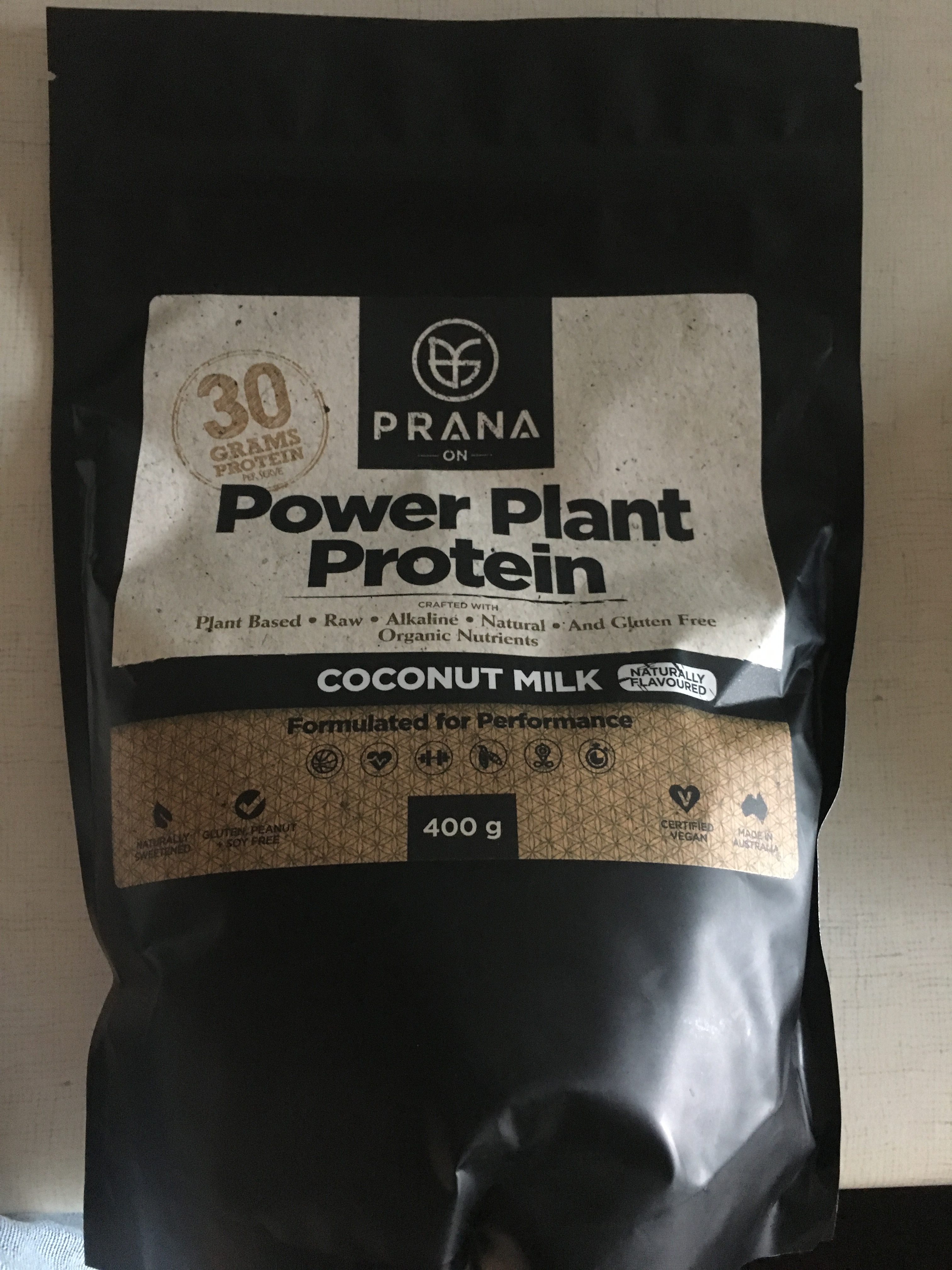 The one I chose Today, was Power Plant Protein from Prana. As the name states, it is a plant-based supplement made from pea, sprouted and fermented brown rice, and sacha inchi* protein. This product is also fortified with digestive enzymes, probiotics, and amino acids.
One serving contains about 155 cal, 30 grams of protein, and only 2.7 grams of sugar (low carb as well with 7.5 grams of total carbs) which is adequate for most people trying to build or maintain muscle mass.